
Dance website examples
Dance Studio Website Examples: Four Useful Design Lessons
Look beyond the visual style to the decisions a family needs to make before choosing a class.
A useful dance studio website example shows how visitors choose, not just how a homepage looks. This guide reviews four operating websites through program fit, location, schedule, trial, and registration tasks. It is an editorial review, not a ranking of the best studios or proof of higher enrollment.
How to evaluate an example
- Can a new visitor identify who the studio serves and which class or program fits?
- Are location, schedule, tuition context, and the next action understandable?
- Can returning families reach their account without confusing a new visitor?
- Is seasonal information distinct from the everyday class journey?
1. BeatStreet 3D: a clear first-visit choice
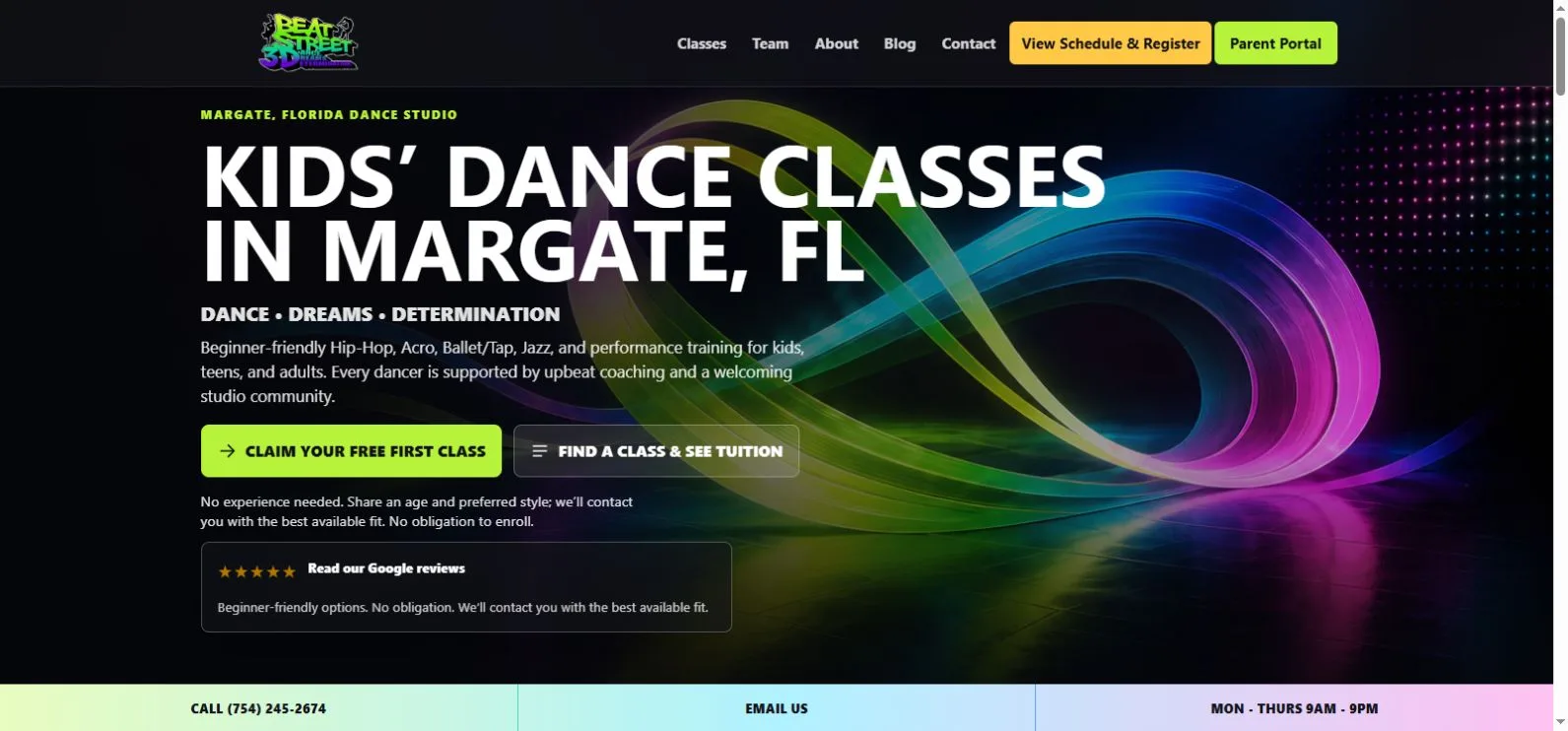
The BeatStreet 3D homepage identifies its Margate location and separates a free-first-class route from finding a class and tuition. The navigation also distinguishes the parent portal from public class information. These labels help a visitor understand whether they are exploring a first visit or returning to an existing account.
Lesson to apply: use the action that matches the visitor’s readiness. Explain the first visit before asking for an account. Read the BeatStreet 3D project note for the evidence and scope limits. Completed website work by 8CountWeb.
2. Dance Theatre: location is part of class choice
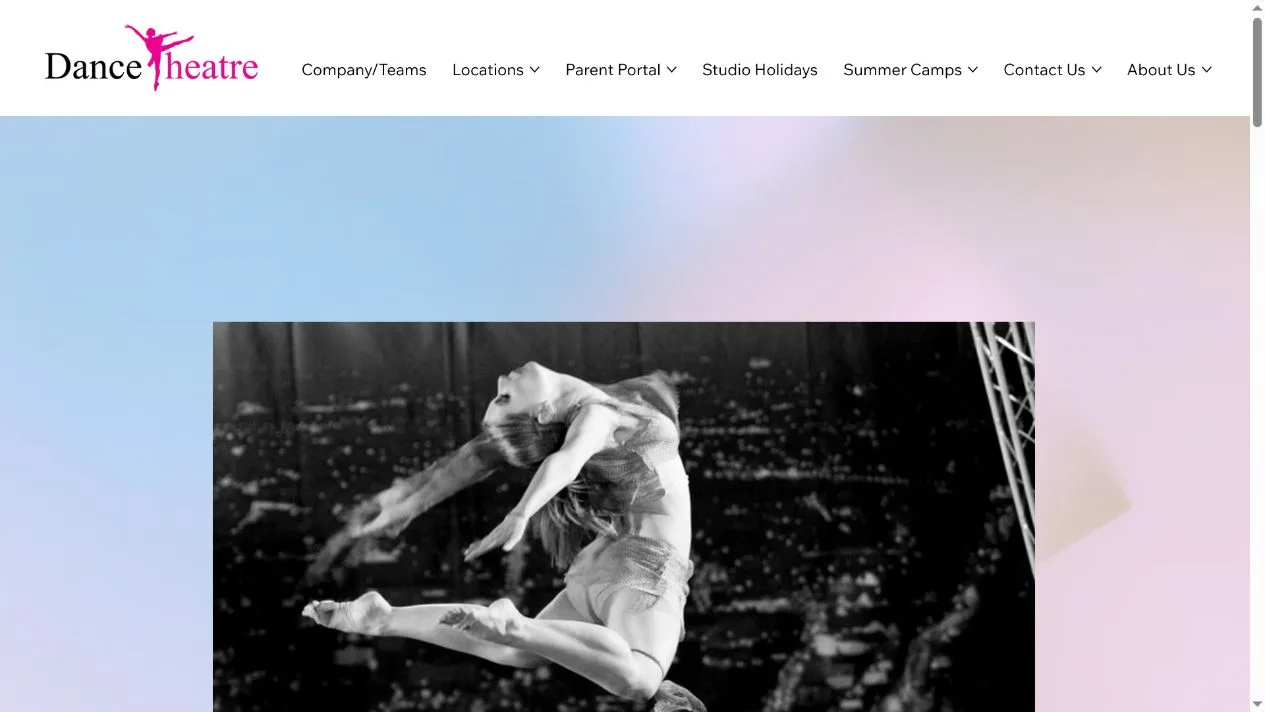
The Dance Theatre homepage gives visitors named location choices and keeps location, parent-portal, and company/team navigation distinct. A studio serving more than one area needs this location decision before sending families to a schedule or contact destination.
Lesson to apply: keep the chosen location visible throughout program discovery and the handoff. Do not make a family infer which branch a registration link serves. Read the Dance Theatre project note. Completed website work by 8CountWeb.
3. Broadway Dance Center: separate audiences and class discovery
The Broadway Dance Center homepage provides distinct schedule, faculty, program, and Children & Teens routes. Featured classes pair level and discipline information with registration actions. Its first-visit questions offer context about class signup and level selection.
Lesson to apply: audience labels and readiness information are useful before enrollment. A smaller family studio can use a much simpler version of this structure; it does not need a large training center’s volume of navigation or events. This is an independent public example, not 8CountWeb work.
4. Steps on Broadway: distinguish schedules, account access, and training
The Steps on Broadway homepage places class booking, schedule updates, and account access on separate routes. It distinguishes professional training from the academy and shows in-studio or virtual actions for featured sessions.
Lesson to apply: tell a visitor which kind of program or attendance format they are choosing before the provider handoff. Reuse the decision principle rather than a busy page layout. This is an independent public example, not 8CountWeb work.
Turn inspiration into a practical brief
Choose the decisions relevant to your studio: age or experience fit, style, location, trial expectations, schedule, and registration. Identify where those answers belong, who keeps them current, and which platform completes the next step. Then choose the visual style that supports that structure.
For a first-visit journey, start with the dance trial-class page guide. For a provider handoff, use the website and parent-portal guide. Compare dance website cost and responsibilities before choosing a scope.
Review method and limitations
Reviewed October 20, 2026 using live public pages in the Codex browser and existing 8CountWeb project references. Observations describe visible information and links, not completed registrations, audited accessibility, speed scores, or measured conversion performance. Sites can change. No third-party screenshots, endorsements, or testimonials are reproduced here.
Review the dance studio website design approach or discuss your studio website.